
Your Dives Aren’t Random.
Find Out What’s Really Limiting Your Freediving
Two freedivers can have the same PB, follow the same training and experience completely different dives.
Why?
Because how your body responds to breath-holding matters just as much as how far you can dive.
The Freedive Fitness Assessment uses 3 targeted in-water tests to uncover your individual freediving profile — so you can understand your body, identify what’s holding you back and train what actually matters.
Discover your Freediving Archetype™
Understand your CO₂ sensitivity
Identify your endurance profile
Get personalised training recommendations
Stop guessing. Start training the diver.
You already know WHAT happens in your dives.
But do you know WHY?
Maybe your contractions start frustratingly early.
Maybe everything feels manageable until the middle of the dive — then the intensity suddenly shoots up.
Maybe you're incredibly comfortable… until you suddenly hit a wall.
Or maybe nothing feels particularly wrong.
You're training consistently.
You're reasonably strong across the board.
But you're just not improving.
These experiences can feel random.
They're often not.
The way discomfort develops, how you respond to CO₂, where effort increases and where your dives begin to break down can give us clues about what's actually limiting your performance.
And that matters.
Because if you don't know what you're trying to improve…
how do you know you're training the right thing?

Same PB. Completely Different Problem.
Imagine two freedivers with a 100m PB.
Diver A
Starts struggling at 50m.
Contractions arrive early.
The dive feels uncomfortable for a long time — but somehow they keep going.
Diver B
Feels fantastic at 50m.
Still comfortable at 75m.
Then suddenly everything changes and they hit a wall.
Both can swim 100m.
But their bodies are giving us very different information.
So should they really be doing the same training?
Probably not.
That's the problem with choosing training based only on PBs, generic tables, or what worked for another freediver.
Before deciding how to train, it helps to understand what you're actually training.


We started seeing the same
patterns again and again.
Four Very Different Types of Freediver.
After analysing the training and performance patterns of 200+ pool freedivers, we began noticing something fascinating.
The same strengths appeared.
The same weaknesses.
The same relationships with discomfort.
The same training habits.
The same places where dives started falling apart.
Those patterns became the Freedive Fitness Archetypes™.
Which one are you?
More importantly…
what does it mean for how YOU should train?
The Pusher
Suffers early. Keeps fighting.
Discomfort arrives early, but Pushers often have an impressive ability to tolerate it and continue.

The Spiker
Fine… fine… fine… then suddenly NOT fine.
Effort can jump rapidly through the middle of the dive, making performance feel unpredictable.

The Crasher
Effortless — until they hit the wall.
Comfortable and efficient through easier distances, but performance can deteriorate rapidly as they approach their limit.
The Balanced
Nothing obviously wrong. So what do you fix?
Strong across the different demands of freediving, but without an obvious weakness to target, training direction can become the problem.
Don't Guess Your Archetype. Measure It.
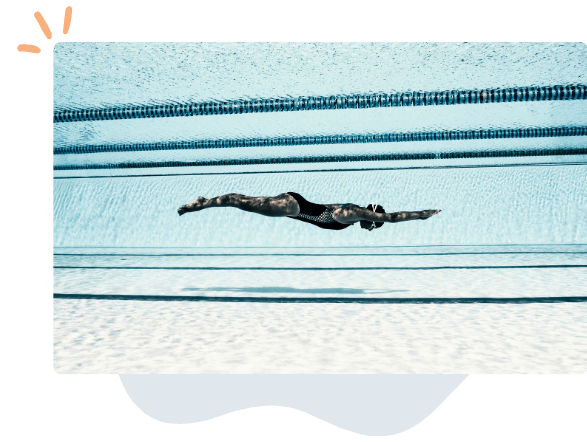
The Freedive Fitness Assessment uses three targeted dynamic apnea tests designed to expose different aspects of your performance.
Combined with information about your current diving and training, we analyse the results to build your individual freediving profile.
We're looking beyond simply:
“How far can you swim?”
Instead, we're asking:
How does your body behave as the dive gets harder?
Your Archetype helps us understand how your apnea engine behaves as effort, CO₂, discomfort and physiological stress increase. Pusher. Spiker. Crasher. Balanced.
Which pattern do you actually match?
Do you react strongly to rising CO₂?
Does discomfort appear disproportionately early?
Or are your warning signals arriving unusually late?
Understanding your CO₂ response helps us determine how to approach intensity in your training.
Does your maximum performance match your underlying endurance?
Can you tolerate training volume effectively?
Or is general/muscular endurance quietly limiting your ability to turn fitness into more metres?
Your assessment helps reveal the relationship between your maximum and the engine supporting it.

This isn't just a label.
Your Results Tell Us What To Do Next.
Finding out you're a Pusher, Spiker, Crasher or Balanced is interesting.
Knowing what to do with that information is what makes it useful.
Your £79 Freedive Fitness Assessment includes:
We learn about your current performance, experience, training and goals.
You'll complete three dynamic apnea exercises designed to reveal different aspects of your freediving performance.
We analyse the relationship between your results rather than simply looking at your maximum distance.
Discover whether your profile most closely matches Pusher, Spiker, Crasher or Balanced.
Understand the physiological factors that influence how your dives feel and perform.
Your results explained clearly — including your strengths, potential limitations and priorities.
Not 20 exercises.
Not another generic training plan.
Three exercises selected specifically around what your results show us.
Including appropriate distance, recovery, volume and intensity guidance.
Less Guesswork. More Clarity.
What Happens When You Train What Matters?

Just 3 exercises, clear targets, ready to slot into my training plan.
I really enjoyed receiving the report and being able to implement the exercises, and that I wasn't flooded with loads of different things to do. Just 3 exercises, clear targets, ready to slot into my training plan. It's worked a treat. The result? No contractions until 100m turn, surfaced at 155 super fresh, filled with confidence that I have more meters in me.
— Hannah, UK
155m — surfaced feeling fresh.
The point isn't that every diver will swim 155m. It's that Hannah didn't need dozens of new exercises.
She needed clarity about what to train.

“It helped me pinpoint why certain dives feel the way they do.”
— Helena, UK

“It cemented that there needed to be a change in my training strategy.”
— Hannah, UK
“Everything is well explained, and the route to better results is clear.”
— Nicolas, South America
“In freediving, it's often difficult to get clear answers. This provided them.”
— Koyo, Asia
Is This Assessment For You?
The Freedive Fitness Assessment is designed for pool freedivers who are already training dynamic apnea and want to better understand their performance.
It could be particularly useful if:
You've hit a plateau and aren't sure what to change.
Your performance feels inconsistent.
Your contractions or discomfort arrive frustratingly early.
Your dives feel easy until suddenly they don't.
You're doing plenty of training but aren't seeing the progress you'd expect.
You don't know whether you should focus on CO₂, endurance, intensity, volume or something else.
You're following generic tables without really knowing why.
You're progressing well but want to train more precisely.
You don't necessarily need to train more.
You may need to understand what your current training is actually doing

Your Results Aren't
AI-Generated by Quiz
They're Analysed By A Freediving Coach.
Nathan Vinski
CMAS & AIDA Freediving Instructor, Coach & Competitive Diver.
Nathan has spent over a decade working in freediving education, coaching and athlete development, including coaching competitive freedivers internationally.
His approach has always been simple:
Train smarter, not harder.
The Freedive Fitness Assessment brings that philosophy into a structured testing process, using your performance data to help determine where your training attention should go next.
Your next PB isn't the first question.
First Find Out What's Holding You Back.
You can keep adding more CO₂ tables.
More metres.
More max attempts.
More hard sessions.
Or you can find out what your body is actually telling you.
3 targeted tests.
1 personalised performance profile.
Your Freediving Archetype™.
Your CO₂ sensitivity.
Your endurance profile.
3 targeted training exercises.
£79
Understand your diving. Train what matters.
About the Freedive Fitness Archetypes™
The Freedive Fitness Archetypes™ framework — including the Pusher, Spiker, Crasher and Balanced archetypes — was developed by Train Freediving / Sport Freediving UK Ltd as part of our freediving performance assessment and training methodology.
The framework, assessment methodology, associated educational materials, graphics and training applications are proprietary to Sport Freediving UK Ltd.
© 2026 Sport Freediving UK Ltd. All rights reserved.
About:
Train Freediving is a global leader in freediver training and education. Providing freediving courses, coaching, and digital training in Wales, the UK, and worldwide. Our approach is simple: learn to freedive comfortably and confidently – and have fun doing it! As the premier CMAS-affiliated education provider in the UK, you can trust that when it comes to learning about the sport of freediving, there's no one better to guide you.


